
If you visit the studio for a design consultation, I can guide you on how to get the perfect resize, but its not always possible if I am working remotely with clients. Read on for my top tips to get your ring size just right.
Why The Right Size Matters
Everyone has their own level of comfort with ring size with some preferring them to fit loosely with lots of wriggle room and others preferring them to fit more snuggly. Be this as it may, these are the signs the fit of your ring is not right:
If your ring is too tight, especially in hotter weather, rings can feel extremely claustrophobic and uncomfortable. Worst case, you may need the ring cutting off to remove it. Commonly, when rings fit too tight, people experience soreness and skin irritation under the rings, so this is a good sign if your ring is too tight.
If your ring is too loose, it will feel too chunky between your neighbouring fingers and will come off with very little effort, which in colder weather could mean losing your ring.
I find it is common for gentlemen who have never worn a ring before to err on the side of caution and go big on their ring size out of fear of getting it stuck on. But try not to go big; if a ring fits well, it will become so normal for you to wear it that it will feel very strange when you’re NOT wearing it – trust me!
How The Right Size Should Feel
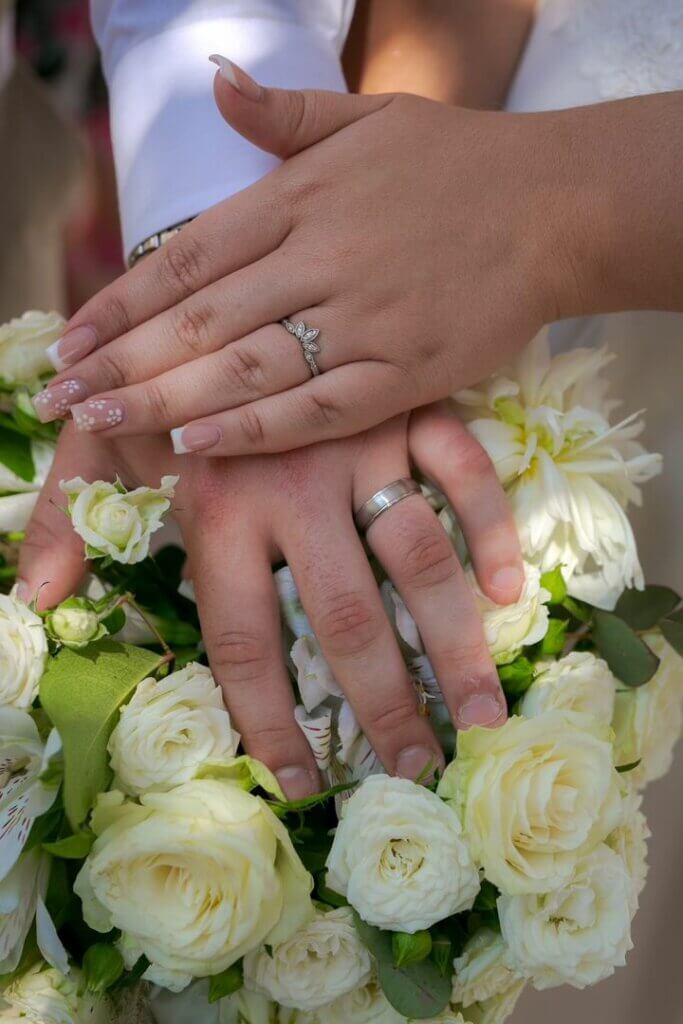
What you are looking for is a ring that does not come off too easily but also is not too challenging to remove. Finger shape comes into play here as those with ‘ring fingers’, i.e. those with knuckles slightly larger than the base of their finger, will need to exert more effort to remove their rings over their knuckles than those with tapered shape fingers that progressively get larger down the finger.
If you have ‘ring fingers’, we want to go as tight as you are comfortable with over your knuckle so the ring does not spin too much when in the correct position on your finger. Where the knuckle is much larger than the base of the finger, we can look at a hinged design or sizing humps in the back of the ring to stop any top heavy designs from spinning.
If you have tapered fingers, your rings will fit tighter and you may need differently sized rings at different points on your finger. For example, if stacking an engagement and wedding ring, your wedding ring may need to be a size larger than your engagement ring to fit the lower part of your finger comfortably. This is totally normal.
Consider The Weather
If you are measuring your finger size during a heat wave, you are looking for the size you choose to be the tightest you are comfortable with to ensure it won’t be too large when your finger reduces in size in the cooler months.
Conversely, if you are measuring at a cold time of year, allow space for some summer swelling!
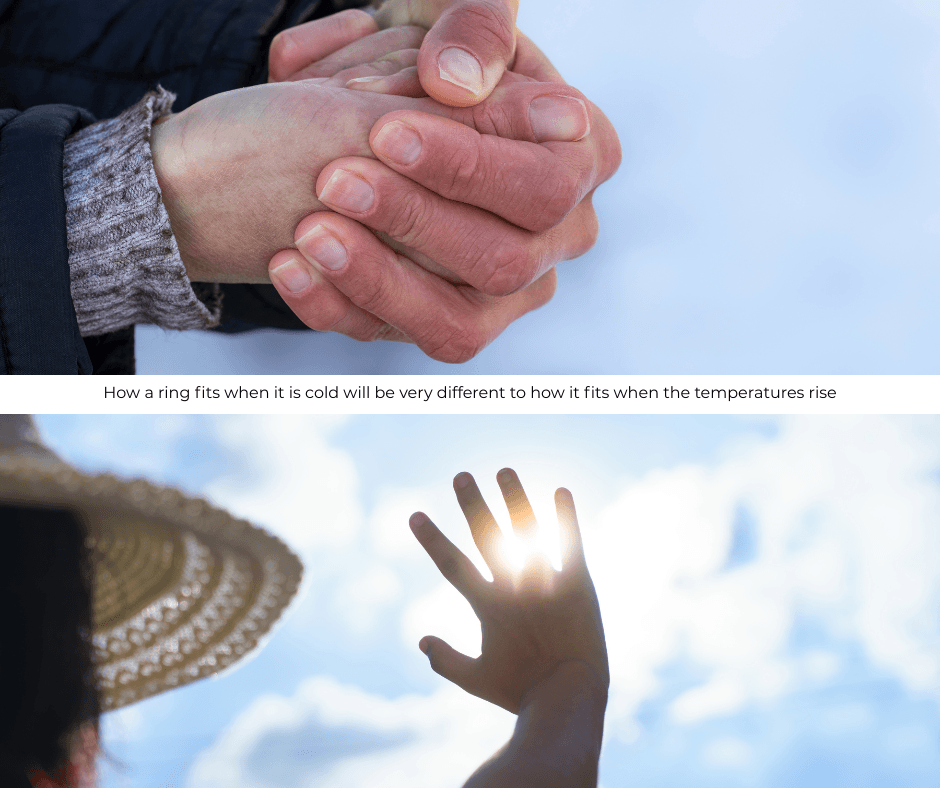
If you are not a ring wearer already, you may not have noticed how much your fingers swell in the summer or when on a plane, but there can be quite a size difference at different points of the year. Personally, I don’t wear my rings at night time in the summer due to heat swelling.
The Affect of Ring Width
The wider the band of your ring, generally speaking, the larger the ring size you will need. Wider bands are more restrictive so a larger size is needed to feel comfortable. You need to bare this is in mind when selecting the right way to measure your finger.
If your ring is around 2-3mm, a standard narrow ring gauge will give you an accurate result.
If your ring is 6mm or above, you need to try and recreate this width either with a belt style ring gauge or multiple narrow gauges. My top tip for this is to put on 2 or 3 gauges at the same time as though they are one ring to get an accurate idea of how your ring will feel to put on and off.
If your ring is 4-5mm wide, we need both your narrow and wide sizes to take an average from. I expect most people to have at least one ring size different between their narrow and wide sizes, so we often end up with a half size ring. This is not a problem at all for bespoke jewellery as it is made to your exact size!
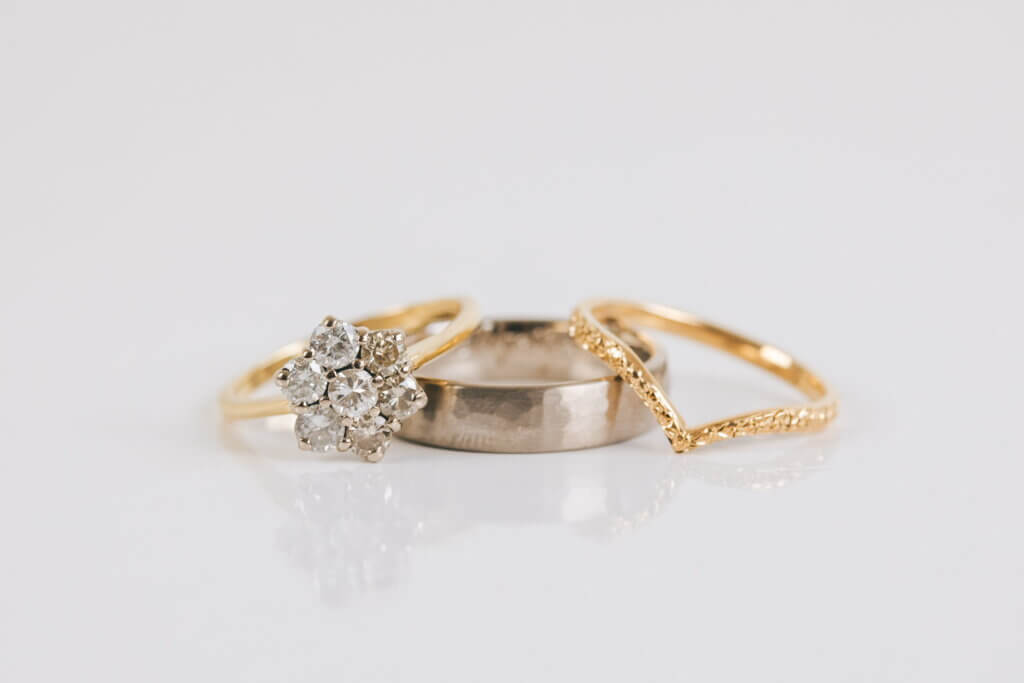
Likewise, if you are planning a stack of rings, you need to replicate the width of the stack when sizing your finger to ensure all of the rings feel comfortable together.
Profile Can Play A Part Too
I can guide you on how your chosen profile may affect the size you go for as well as the width. If you opt for a halo, court, oval court, flat court or modern court profile, these will all have a radius on the inside for comfort. This also makes going over the knuckle easier too so you can go down slightly in size to account for this.
Flat or D profiles are straight on the inside and therefore you may need to size up slightly to account for this.
I can guide you with this on your particular project.
Ring Gauges
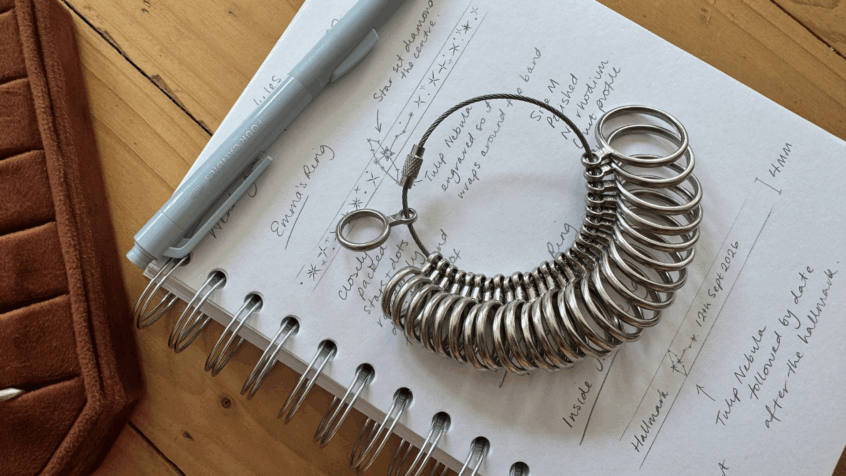
If we are working remotely and you are in the UK, I will send you a set of ring gauges. The metal gauges have letters assigned to them, so once you have decided on the correct size, just let me know the size ring by letting me know the letter. These gauges commonly only have full sizes on them, but if you feel you are between a size, that is not an issue at all – we can produce your design in a half size.
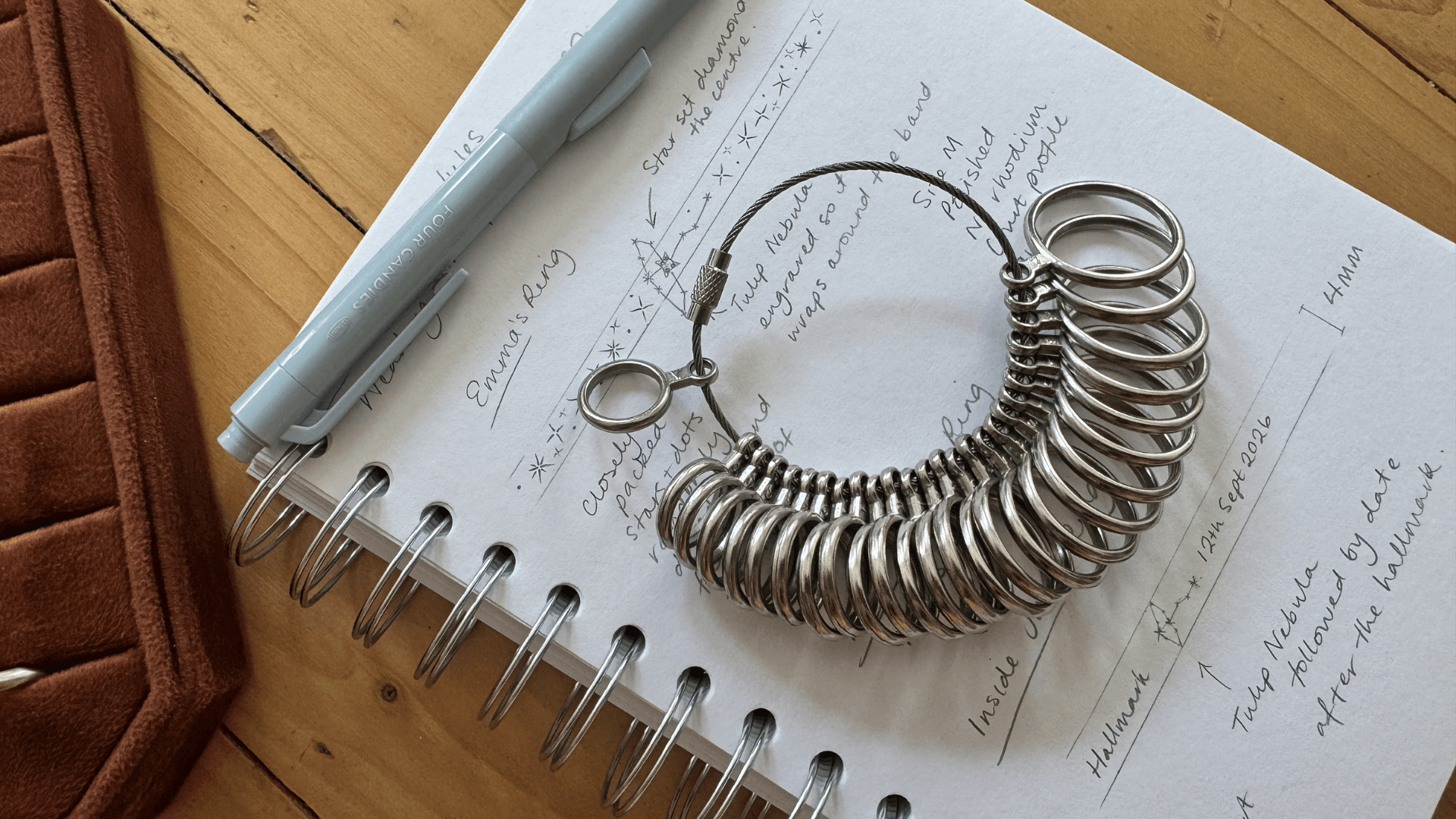
If you need to use the belt gauge for a wider design, slide the gauge to a size and hold it tight so it does not expand over your knuckle as you push it onto your finger.
If you are sizing up for a hinged ring, don’t worry about going over the knuckle – just focus on how the ring feels at the point on your finger where you will be wearing the ring.
Other Sizing Options
Can’t get hold of a ring gauge or planning a very wide ring? Cut a strip of paper the same width as your planned design. Wrap around your finger and make a mark where the paper crosses over. Measure the length between these two marks and send me this measurement for me to calculate your ring size.
Non stretchy thread or string is also good in the same way – cut where the string crosses over and measure the length in millimetres.
If you are trying to get a ring size secretly, you can find an existing ring the recipient wears (preferably on the same finger) and measure it using a ring sizing app. I recommend the JW Ring sizer app, where you can measure the inside circumference of a ring. Again, take note of the finger the ring is worn on and how wide the ring is compared to the design you are planning.
Resizing
If we get it wrong, we can always resize. Give yourself plenty of time before you need the ring (e.g. any hard deadlines like wedding day, birthday, holiday where you plan to propose etc) and your ring can always be resized. I always design my pieces to be resizable to ensure they will last you a lifetime – this is why I don’t recommend industrial metals such as titanium as they cannot be resized, and why I don’t work with resin in memorial pieces.
Size Matters
I hope this has been a useful guide on what you are looking for when measuring your ring size and also how to use the tools available to get the size right.
If we are working on a bespoke piece remotely, I am always more than happy to hop onto a video call to take a look at the gauges on your hand and give you guidance.